
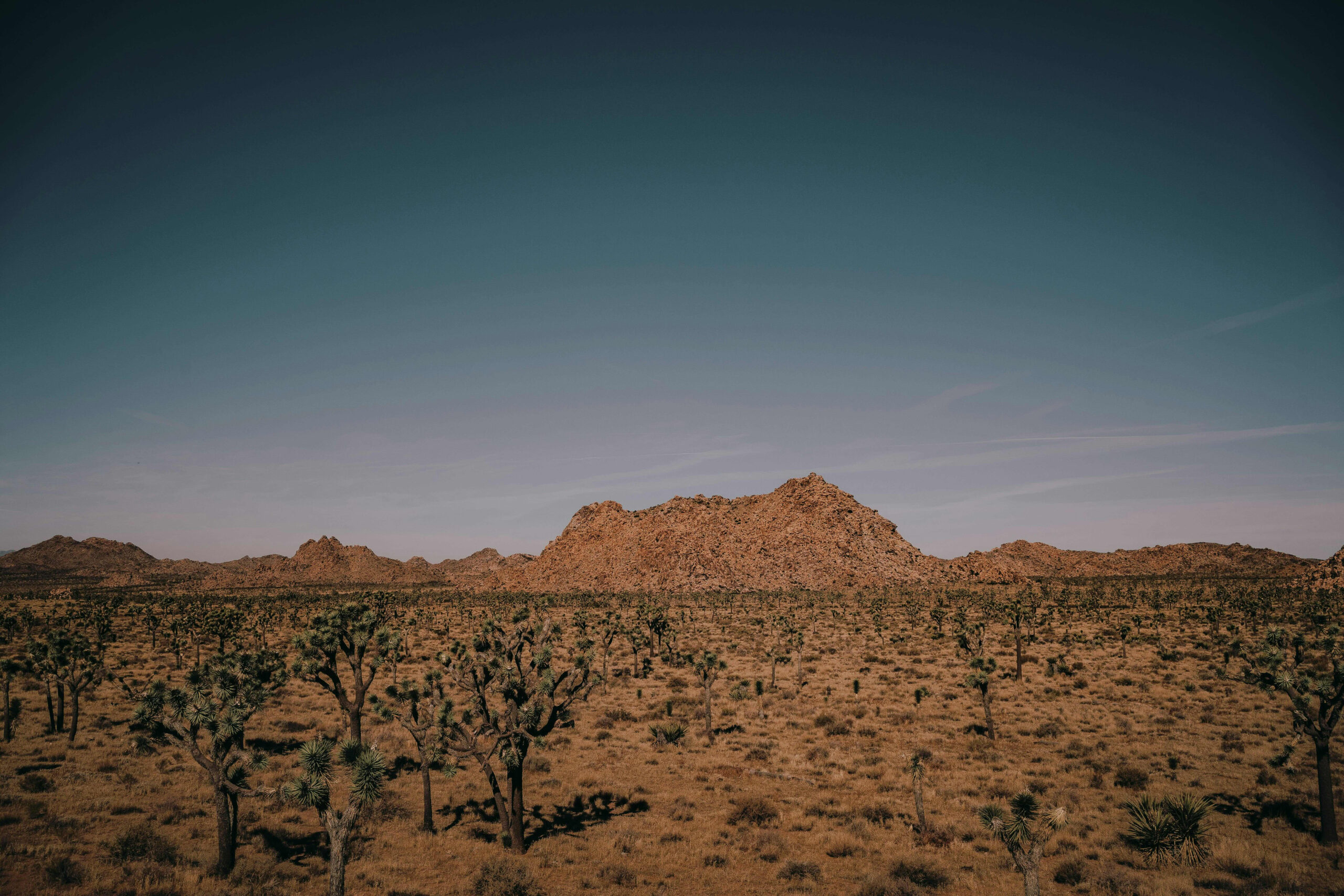
For two punishing years, Cadiz Inc. has watched the prospects of its desert damaging Mojave Desert water mining project steadily dim. Water districts have concluded that the water mining project is unsustainable since Cadiz Inc. would drain much more water from a fragile desert aquifer than is replaced by infrequent desert rains. Cadiz water extraction will dry up aquifer-fed water sources like Bonanza Springs, on which desert bighorn sheep and other wildlife depend for survival.
Cadiz has hoped to build pipelines that would connect its water to other distribution systems like the Colorado River Aqueduct so it could reach many water districts in Los Angeles and Orange counties. Since those districts have rejected Cadiz, it has forced the company’s sales efforts into the narrow confines of the Victor Valley between Victorville and Barstow and a few other areas.
Cadiz’s shrinking customer base is just one of Cadiz’s recent woes. Over the past two years the company has been rejected for a critical lease by the California State Lands Commission, shunned by Arizona’s water finance authority, downgraded to the worst possible stock rating, condemned by tribal nations, and its CEO has been caught making false statements to a public water agency by the Sierra Club.
Tribes Speak Out
In an early April 2026 op-ed, the chairmen of the Chemehuevi Indian Tribe and the Fort Mojave Indian Tribe published a scathing editorial opposing the Cadiz water-mining project, declaring that the scheme would cause “irreparable harm to our people, our way of life, and our traditions.” The tribes’ traditional territory covers the Cadiz project area, and their leaders are calling on all tribal nations and allies to stand with them against Cadiz.
The Chemehuevi Indian Tribe has stated that the desert springs threatened by Cadiz are sacred and part of the Salt Song Trail — a spiritual and cultural landscape. The Tribe has warned that if the Cadiz project proceeds, they will permanently lose the living world that preserves and teaches traditional ways that have existed since time immemorial.
The National Congress of American Indians, the Chemehuevi Indian Tribe, the Fort Mojave Indian Tribe, and the Tribal Alliance of Sovereign Indian Nations all stand firmly against Cadiz. This opposition is getting more vocal and it is not going away.
Wall Street Weighs In
Also in early April 2026, the well-known Zacks Investment Research firm changed its rating of Cadiz stock to a “strong sell” — the worst rating it gives. Zacks assigned Cadiz a Value Score of F, a Growth Score of F, and a Momentum Score of D.
The numbers behind the rating are stark. Cadiz has accumulated a deficit of $676.1 million over its history and reported a net loss of $36.6 million for fiscal year 2024. Its Altman Z-Score — a widely used bankruptcy prediction formula — stands at negative 5.5, deep in the “probable bankruptcy within two years” zone, and all $60.6 million of the company’s corporate debt matures on June 30, 2027.
A Federal Lifeline May Be Gone
Cadiz has boasted about being invited to apply for a $194 million low-interest loan from the Water Infrastructure Finance and Innovation Act program, or WIFIA. That money would be essential to pay part of the staggering cost of the so-called Cadiz “Northern Pipeline,” but the program’s budget is being slashed by the Trump Administration.
Completion of the Northern Pipeline is essential for Cadix to reach customers in the Victor Valley and gateways to LA such as the California and LA Aquaducts. However, Cadiz lacks financing, leases to cross state land, and approval from the state to operate at all. began operation.fee. Currently, Cadiz is striking out on all three.
The December 2024 Debacle
On December 17, 2024, reality caught up with Cadiz. The California State Lands Commission voted unanimously — 3 to 0 — to reject Cadiz’s request to be added to the El Paso Natural Gas pipeline lease over a one-mile section of state land. The rejection was not just pipelines. It was about Cadiz’s credibility.
Commission Chair Malia Cohen, who also serves as State Controller, raised serious concerns about the company’s financial instability, citing its mounting debt and ongoing losses.
“We have no assurance that the project, which appears to be the only potential revenue source for this company, will ever come to fruition,” said Cohen “And so I’m not willing to gamble with taxpayers’ money.”
Cohen also condemned Cadiz’s long-standing pattern of secrecy, noting that the company had failed to notify the Commission of its pipeline plans as required. She pointed out that Cadiz had purchased the pipeline in 2014 but did not disclose the sale to the Commission until 2021 — a violation of lease terms.
The Commission did not simply deny the lease and move on. It terminated the existing pipeline right-of-way lease that could have continued until 2035 and issued a three-year caretaker lease solely to El Paso Natural Gas, with instructions to develop a decommissioning plan.
The Sierra Club Angeles Chapter Water Committee and the San Gorgonio Chapter helped make the Cadiz defeat possible by bringing many speakers to the December 2024 commission meeting, along with allied groups including Fort Mojave Tribal Chair Tim Williams, representatives of the Dolores Huerta Foundation, Sacred Places Institute, Audubon, the Chemehuevi Indian Tribe, the Environmental Justice Coalition for Water, the People’s Coalition for Environmental Justice, and the National Parks Conservation Association.
Environmental justice and civil rights leader Dolores Huerta’s position was read into the record: “I have long advocated for water solutions that prioritize people, especially disadvantaged communities, and the environment, which is why I strongly oppose Cadiz.”
The Commission’s attorney was specific: “The Northern Pipeline is a water conveyance facility and Cadiz, Inc. is a transferor of water. If Cadiz wishes to transfer water out of a Mojave Desert groundwater basin, then a Water Code Section 1815 finding is required for the project. Cadiz has not provided a project description to Commission staff.”
California Water Law Haunts Cadiz
Water Code Section 1815, established by Senate Bill 307 in 2019, is clear: no water can be taken from desert aquifers in the southeastern Mojave unless the State Lands Commission, together with the Department of Fish and Wildlife and the Department of Water Resources, finds that the extraction will not harm natural or cultural resources. The burden falls squarely on Cadiz — not on the public, not on tribes, not on independent scientists — to prove that its water-mining scheme is harmless.
During the legislative debate on SB 307, Cadiz’s own lobbyist admitted that the company would not be able to pass review because proving no impacts would be impossible.
Cadiz CEO Caught Misrepresenting Facts
At a Mojave Water Agency committee meeting, Cadiz CEO Susan Kennedy made entirely false claims about the company’s situation — including the assertion that Cadiz was not even a lease applicant before the California State Lands Commission at its December 2024 meeting. This was flatly untrue. Cadiz was listed as an “applicant” on the lease, and was unanimously rejected 3-0.
The Sierra Club’s Water Committee corrected the record at the meeting and followed up with a detailed memo documenting Kennedy’s misrepresentations.
Kennedy has also acknowledged publicly that the company’s reputation is a liability. In an interview with the LA Times, she admitted that “the Cadiz name is a poison pill” — hence the constant rebranding efforts, including the company’s adoption of Metropolitan Water District’s own “One Water” slogan and the attempt to recast a decades-old desert water-mining company as a social justice enterprise. As LA Times columnist Michael Hiltzik has written, “It’s hard to think of a California company that carries more toxic baggage than Cadiz Inc.”
Too Toxic for a Thirsty State
Arizona is in a historic water crisis. The Colorado River is shrinking, aquifers are stressed, and cities are scrambling for reliable new supplies. If any state should be receptive to a new water source, it would be Arizona.
In November 2025, Cadiz tried to find a new market there by partnering with EPCOR, a Canadian water company, to sell 25,000 acre-feet of Mojave Desert water annually to Arizona customers. The costs were to have been underwritten by Arizona’s Water Infrastructure Finance Authority, known as WIFA. When the WIFA board met on November 19th, it reviewed several major water-importation proposals: desalination, water recycling, aquifer recharge. It approved them. The one it rejected was the Cadiz proposal.
Board member David Beecham was blunt: “That one’s over, we’re not doing that.” WIFA Executive Director Chelsea McGuire told reporters that the projects the board advanced are “real projects” that are “no longer hypothetical.” Cadiz was not among them.
If a state this desperate for water won’t touch your project, that should tell you everything you need to know.
Water District Passes Resolution Disavowing Cadiz
Cadiz and its backers had been circulating claims suggesting it enjoyed a strong working relationship with the Mojave Water Agency, one of the most important regional water entities in the Victor Valley, an important Cadiz hypothetical area. The claims were unfounded. After the Sierra Club’s Water Committee brought the issue to the agency’s attention and corrected the record, the Mojave Water Agency passed a formal policy statement affirming that it has no relationship with Cadiz.
The Science Is Devastating
The U.S. The Geological Survey found the aquifer’s natural recharge from rainfall is only 2,000 acre-feet per year — yet Cadiz wants to pump 50,000. That means Cadiz plans to extract 25 times more water than nature replaces. Peer-reviewed research published in the journal Hydrology confirmed that desert springs in the project area, including Bonanza Spring — the largest and most vital spring across more than a thousand square miles of desert — are connected to the aquifer Cadiz would drain. Even a one-foot drop in the water table could dry up springs essential to the survival of migrating wildlife like desert bighorn sheep and sacred to Native American tribes.
California’s own Department of Fish and Wildlife rejected Cadiz’s environmental review as scientifically flawed, finding that the company’s claims about spring connectivity and bighorn sheep impacts were both false. The department notified Cadiz’s CEO in 2018 that its environmental impact report was insufficient and that significant new threats to desert wildlife had not been disclosed. To this day, those California agency findings still stand.
Congressional, California Opposition Serving as Watchdogs
In July 2025, U.S. Senators Adam Schiff and Alex Padilla wrote to Interior Secretary Doug Burgum warning that Department of the Interior experts, including at the U.S. Geological Survey and the National Park Service, as well as peer-reviewed scientific analyses, have warned of significant and irreversible impacts that the Cadiz project could have on federal lands and surrounding communities. The Senators reminded the federal administration of the need to conduct legally required environmental review of Cadiz’s groundwater pumping.
In June 2025, the chairs of both the California Senate and Assembly Natural Resources Committees — Senator Monique Limon and Assemblymember Isaac Bryan — wrote to the State Lands Commission expressing deep concerns about Cadiz and urging the Commission to ensure the company undergoes the legally required Water Code 1815 review. Senator Limon, who led the letter, is now the leader of the California State Senate. In response, the State Lands Commission wrote to Cadiz’s CEO stating that any attempt to use the pipeline for water conveyance without Commission authorization could cause significant litigation.
Keep Up the Fight Against Cadiz
“Cadiz is in trouble,” said Angeles Water Committee Chair Charming Evelyn, “But Cadiz has come back before. We need to keep our efforts to stop it going at full speed until the project is truly stopped for good.”
One way to help is to join the Sierra Club Angeles Chapter Water Committee.
By John Monsen
John Monsen’s current work includes Chairing the Save Our Springs Water Committee and serving as Campaign Manager for the growing Northern Angeles Forest National Monument Campaign. He is Vice Chair, Sierra Club Angeles Chapter Foundation and he Vice Chair of the Chapter’s Water Committee. John served for seven years on the Sierra Club Sierra Club National Field Staff and he is a long-time public lands and equity advocate. He is President of JFM Consulting and has 25 years of public land work experience including desert protection. He received the Public Lands Award from Sierra Club California in 2020 in part for his work to establish the San Gabriel Mountains National Monument.